In Ghostbusters, discovering that ghosts exist does not lead to a philosophical crisis. It leads to a business plan.
That comic premise helps explain why the 1984 film remains so distinctive. Ghostbusters combines supernatural horror, science fiction, workplace comedy and New York attitude without allowing any single genre to overwhelm the others. The ghosts may be real, but so are the rent, equipment costs, government regulations and challenges of attracting customers.
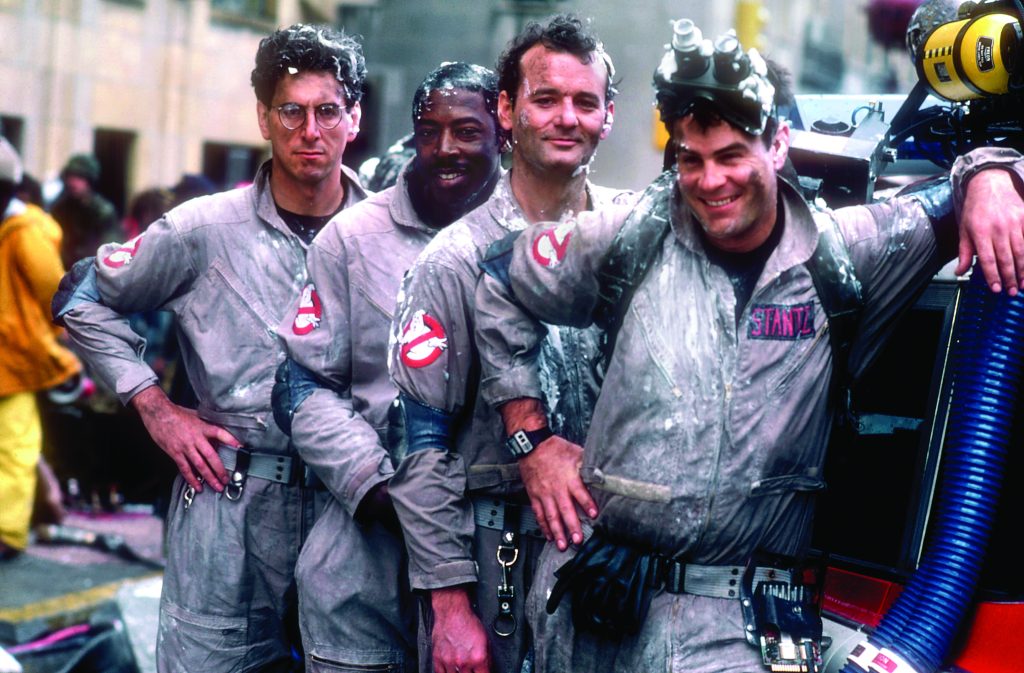
Bill Murray, Dan Aykroyd and Harold Ramis star as Peter Venkman, Ray Stantz and Egon Spengler, three university parapsychologists whose academic careers end shortly after they encounter an apparition in the New York Public Library. Rather than abandon their research, they convert an old firehouse into the headquarters of a paranormal-removal company.
Their operation expands with the addition of Winston Zeddemore, played by Ernie Hudson. Sigourney Weaver portrays Dana Barrett, a musician whose apartment becomes connected to a supernatural threat capable of placing the entire city in danger.
The original idea came from Aykroyd’s longstanding interest in paranormal phenomena. His early concept was considerably larger and more fantastical, imagining established ghost hunters traveling through different dimensions. The project was reshaped by director Ivan Reitman and co-writer Harold Ramis into a contemporary New York story about eccentric scientists building an unusual small business.
That decision gave the movie an essential grounding. The Ghostbusters do not begin as universally admired heroes. They are unemployed academics with questionable equipment, an enormous mortgage and no proven customer base. Their headquarters is run-down, their vehicle needs significant work and their first major assignment leaves a hotel ballroom covered in destruction.
The film’s humor comes from how seriously the characters approach the absurd. Ray and Egon discuss paranormal energy and dangerous technology with complete sincerity. Peter treats supernatural investigations as opportunities for improvisation, publicity and flirtation. Winston enters the operation as an employee seeking a steady paycheck and quickly discovers that the job description was not exaggerated.
Murray’s relaxed delivery gives the movie much of its comic rhythm, but the ensemble works because each performer occupies a different role. Aykroyd supplies enthusiasm, Ramis provides intellectual precision, Hudson brings practical skepticism and Weaver gives the escalating supernatural story an emotional center.
New York is just as important as the cast. The Ghostbusters move through libraries, universities, hotels, apartment buildings and crowded streets as supernatural activity disrupts ordinary city life. Exterior filming included locations such as the New York Public Library, Columbia University, a Central Park West apartment building and the firehouse used as the team’s headquarters. Additional interiors and effects work were completed in California.
The visual effects combined puppetry, miniatures, stop-motion, animation and other techniques. The hotel ghost later known as Slimer, the enormous Stay Puft Marshmallow Man and the creatures guarding Dana’s apartment gave the film images that were comic and threatening at the same time. The effects are memorable not simply because of their technical construction, but because each apparition has a distinct personality.
The movie’s marketing also became part of its identity. The red “no ghosts” symbol could communicate the premise before audiences knew the characters or story. Ray Parker Jr.’s theme song then supplied a musical hook that became inseparable from the movie.
Released in June 1984, Ghostbusters became one of the year’s major box-office successes. It also generated sequels, animation, merchandise and a continuing franchise, but the original film retains a particular energy that later installments have repeatedly attempted to recapture.
In 2015, the Library of Congress selected Ghostbusters for inclusion in the National Film Registry, recognizing it as culturally, historically or aesthetically significant. The Library described it as both a cultural touchstone and an affectionate successor to earlier horror comedies associated with performers such as Abbott and Costello and Bob Hope.
Its durability rests on a simple achievement: Ghostbusters makes the unbelievable feel practical. Even when ancient forces threaten New York, somebody still has to answer the telephone, send an invoice and clean up the slime.
Director: Ivan Reitman
Starring: Bill Murray, Dan Aykroyd, Sigourney Weaver, Harold Ramis and Ernie Hudson
Released: 1984
Rating: PG